Scenario-based modules
Modules are organized around specific professional scenarios — e.g., demand forecasting for retail, anomaly detection for IoT — so learners see how concepts apply end-to-end, from data ingestion to evaluation and deployment.
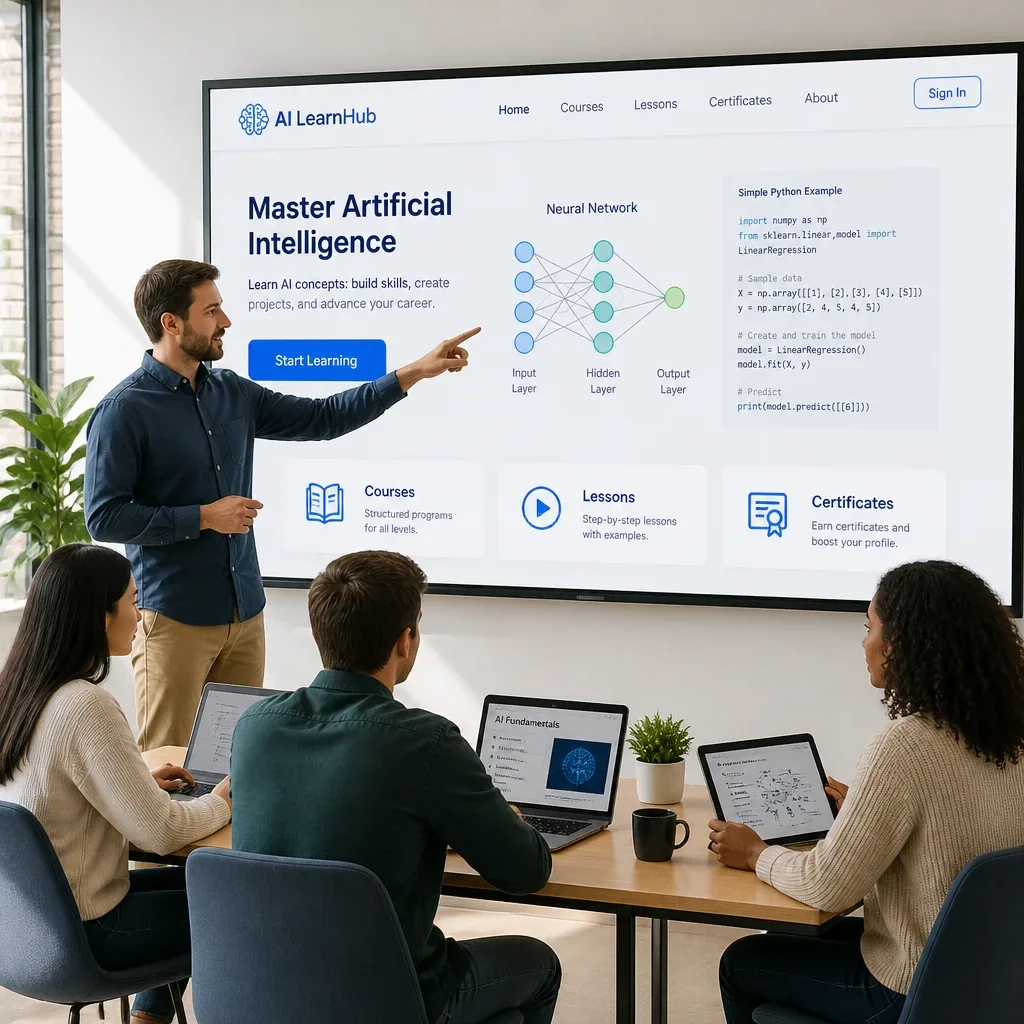
NexorRClass emphasizes a hands-on, case-focused approach to artificial intelligence education. Instead of abstract lectures alone, each course centers on concrete scenarios drawn from industry needs—such as optimizing supply chain routes under uncertainty, building explainable models for regulated environments, or deploying image-classification services in constrained edge settings. Learners progress through data preparation, model selection, validation, and deployment steps, producing reproducible notebooks and deployment scripts. Mentors provide targeted reviews and scenario-specific feedback, while assessments rely on rubrics tied to operational success criteria such as latency targets, model interpretability metrics, and integration readiness. Over multiple cohorts, this approach has been refined with iterative case templates and tested with small-scale pilots in Swiss enterprises and academic labs. The curriculum is organized for hybrid delivery: pre-recorded theory that learners can consume at their own pace, live lab sessions for collaborative problem solving, and capstone presentations evaluated by industry reviewers. Materials include version-controlled datasets, CI-friendly evaluation pipelines, and documentation templates to help learners and organizations transfer outcomes into production environments. The emphasis remains on measurable, practical outputs rather than abstract promises, making the learning effective for immediate application in workplace projects.
Each module frames learning objectives as real cases so learners practice on realistic tasks and progressively complex scenarios.
Weekly live labs with mentor feedback ensure practical problems are solved with industry-informed guidance and code reviews.
Capstone projects focus on producing artifacts—notebooks, APIs, and deployment guides—that teams can adapt for operational use.
For inquiries about courses, pilots, or partnerships, provide a short overview of needs and preferred timelines. NexorRClass will follow up with a proposed pilot structure and practical milestones.
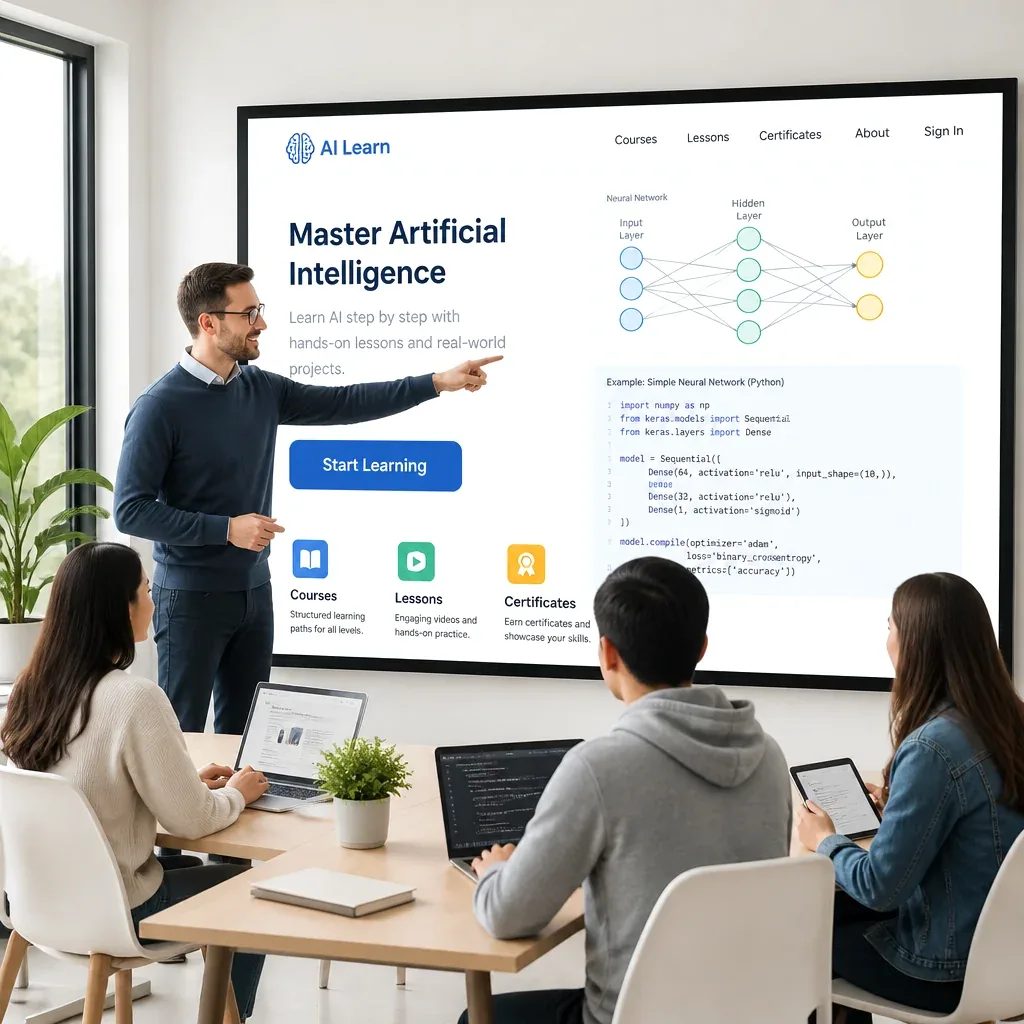
Real scenarios produce reusable artifacts and clearer transfer to workplace tasks. Below are common examples and supporting resources.
Designs case-based modules and coordinates mentor-led labs; focuses on curriculum that maps directly to operational scenarios and measurable project outputs.
Lead instructor with a background in applied machine learning and pedagogy. Focuses on turning theory into reproducible classroom exercises and industry-relevant projects. Regularly authors case-based modules that pair real datasets with deployment scenarios for small teams and solo learners.
Alex designs practical learning paths that combine short lessons, annotated code notebooks, and step-by-step project scenarios. Example case studies include predictive maintenance pipelines for manufacturing sensors and conversational agent prototypes for customer support. Alex prioritizes measurable skill milestones and reproducible project templates for learners at all levels.
NexorRClass focuses on hands-on education in artificial intelligence, emphasizing scenario-driven modules and practical case studies. Each module pairs concise theoretical explanations with laboratories, annotated code, and stepwise project guides. For example, a course on computer vision outlines a factory inspection scenario, includes dataset preparation scripts, a model training pipeline, and a deployment test plan that students replicate in a guided lab.
What sets our approach apart
Modules are organized around specific professional scenarios — e.g., demand forecasting for retail, anomaly detection for IoT — so learners see how concepts apply end-to-end, from data ingestion to evaluation and deployment.
Each case study includes a problem brief, success metrics, sample datasets, and a reproducible walkthrough. Learners implement solutions and compare outcomes against reference results.
Labs focus on building components of real projects: data pipelines, model experiments, API wrappers, and lightweight monitoring. This trains both technical skills and project planning.
Learners submit project artifacts for structured peer review and receive instructor checkpoints tied to the case study rubric, enabling iterative improvement.
NexorRClass provides curated learning tracks, reproducible project templates, and scenario-driven assessments that reflect workplace challenges.
Tracks are mapped to job roles such as ML Engineer, Data Scientist, and AI Product Specialist using practical case assignments.
See more case studiesDownloadable code, Docker configurations, and minimal cloud cost recipes let learners run and validate experiments locally or in the cloud.
See more case studiesStarter templates for pipelines, model evaluation, and deployment accelerate learning while encouraging best practices.
See more case studiesAssessments evaluate how learners solve the whole scenario, not just isolated tasks, emphasizing activity-offs and documentation.
See more case studiesInstructors provide structured feedback on architecture decisions, datasets, and reproducibility of experimental results.
See more case studiesCollaborative workspaces and shared case projects allow cross-functional teams to practice end-to-end AI delivery.
See more case studiesEnroll in guided case-based courses at NexorRClass to work through projects that mirror production scenarios. Each course includes hands-on labs, peer reviews, and a clear rubric for evaluating outcomes.
Quality standards
Practical outcomes
Contemporary toolchain
Organizations trained
Case projects available
Years of curriculum work
Support 24/7